

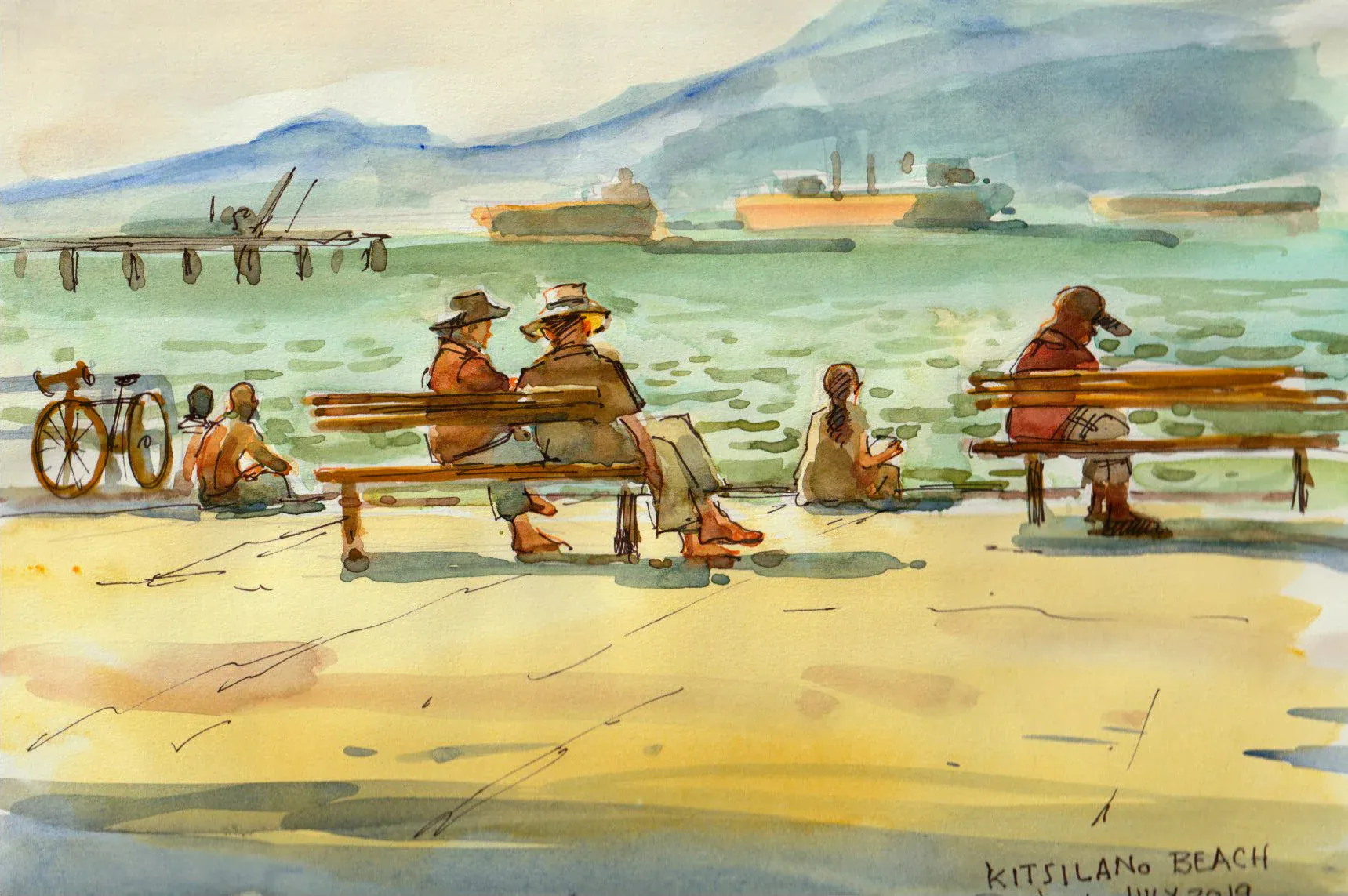
Urban sketching plein air begins the moment you step outside with a sketchbook and decide to draw life as it unfolds in front of you. I remember my first attempt clearly. I sat on a noisy street corner, cars passing, people glancing curiously, hands shaking slightly as I tried to capture a building before the light changed. The sketch was imperfect, but it felt more alive than anything I had drawn indoors.
Urban sketching in the open air is not just about architecture or accuracy. It is about presence. You are responding to sound, movement, weather, and time. Every line becomes a record of a moment that will never repeat. This immediacy is what makes plein air sketching in cities so powerful and addictive.
This article is grounded in real-world practice, shared experiences from urban sketchers, and years of observation. Whether you are new to sketching or looking to deepen your connection with your surroundings, this guide explores how sketching on location transforms both your art and how you see the city.
The Meaning Behind Urban Sketching Plein Air
At its core, urban sketching plein air is about drawing from direct observation in public spaces. Unlike studio work, there is no pause button. The city moves whether you are ready or not.
This practice encourages artists to simplify, decide quickly, and commit to marks. You learn to focus on what matters most in a scene rather than chasing every detail.
Over time, this approach sharpens visual judgment and builds confidence that carries into all forms of drawing.
Why Cities Are Perfect Subjects for Plein Air Sketching
Cities offer endless variety. From old buildings and busy markets to quiet cafés and railway platforms, every corner tells a story.
Urban environments combine geometry with human presence. Straight lines clash with organic movement, creating dynamic compositions.
Sketching cities trains you to balance structure and spontaneity, an essential skill for any artist.
The Emotional Pull of Drawing on Location
There is something deeply human about sitting in a public space and drawing what you see. It slows you down in a fast-moving world.
Many artists describe urban sketching as meditative. You become an observer rather than a passerby.
This emotional connection often shows in the sketches themselves, giving them warmth and authenticity.
Getting Comfortable with Drawing in Public
Fear of being watched is common when starting out. The first few outings can feel intimidating.
Over time, you realize most people are simply curious or supportive. Some may ask questions, others barely notice.
This exposure builds resilience. You learn to focus inward, trusting your process despite distractions.
Observation Skills Sharpened by Urban Sketching Plein Air
Drawing from life forces you to truly see. You begin noticing proportions, relationships, and patterns you once ignored.
Instead of copying photos, you interpret reality in real time. This deepens understanding of perspective and space.
These observation skills transfer directly to studio work, making indoor drawings more confident and informed.
Time Pressure as a Creative Advantage
In urban sketching, light changes quickly. People move. Vehicles block views.
This time pressure pushes you to work efficiently. You learn to capture essence rather than perfection.
Many artists find their drawings become more expressive once they stop overthinking.
Architectural Confidence Through Repetition
Architecture can feel intimidating with its complex perspective and detail. Sketching buildings repeatedly in real settings demystifies them.
You start recognizing common structural patterns. Windows, doors, and rooftops become familiar elements rather than obstacles.
Confidence grows not from flawless drawings, but from repeated exposure and problem-solving.
Capturing People Within Urban Scenes
People add scale and life to urban sketches. Capturing them in motion is challenging but rewarding.
Rather than focusing on likeness, many sketchers suggest indicating posture and gesture. A few lines can suggest a story.
This approach keeps drawings lively without slowing you down.
Tools That Support Urban Sketching Practice
While materials matter less than mindset, choosing tools that feel comfortable encourages consistency.
Portable sketchbooks and reliable pens reduce setup time. The easier it is to start, the more often you will sketch.
Over time, you develop preferences that support your unique workflow.
Weather and Environment as Creative Partners
Sketching outdoors means accepting weather as part of the experience. Wind, heat, and rain all influence your process.
Instead of fighting conditions, many artists adapt. Quick sketches on windy days, longer studies when calm.
These variations add diversity to your work and build adaptability.
Storytelling Through Urban Sketching Plein Air
Every urban sketch tells a story. It might be about a place, a moment, or a feeling.
By choosing what to include or omit, you shape the narrative. A tilted sign, an empty bench, or a passing figure adds meaning.
This storytelling aspect is what draws viewers in and makes sketches memorable.
Building a Daily or Weekly Sketching Habit
Consistency is more important than duration. Regular short sessions build momentum and familiarity.
Many urban sketchers schedule sketch walks or meetups to stay motivated.
Habit turns sketching from an occasional activity into a way of seeing the world.
Learning from Mistakes in Public Sketching
Mistakes are unavoidable in plein air work. Lines go wrong, proportions slip, scenes change unexpectedly.
Instead of erasing, many artists work through errors. These imperfections often add character.
Accepting mistakes accelerates growth and reduces fear of failure.
Community and Shared Experiences
Urban sketching communities exist worldwide. Sketch walks, online sharing, and local groups foster connection.
Sharing sketches creates accountability and inspiration. Seeing different interpretations of the same place broadens perspective.
Community also reinforces that progress looks different for everyone.
Developing Personal Style Through Observation
Style emerges naturally through repeated observation and interpretation. Urban sketching encourages this evolution.
Some artists favor loose lines, others detailed textures. Both approaches are valid.
Your style reflects how you see and respond to the environment.
Mental Health Benefits of Urban Sketching Plein Air
Spending time outdoors with focused attention has proven calming effects. Sketching amplifies this benefit.
It encourages mindfulness and reduces mental clutter. Many artists use sketching as a form of stress relief.
The act of drawing becomes a grounding ritual in busy urban life.
Urban Sketching Plein Air as Visual Journaling
Sketches often serve as visual diaries. Each page records a place, date, and experience.
Looking back through sketchbooks reveals personal growth and memories tied to locations.
This archival quality adds emotional depth to the practice.
Traveling with a Sketchbook
Urban sketching pairs naturally with travel. Drawing a city creates a deeper connection than photography alone.
You notice details tourists often miss. Time slows, and places feel more personal.
Travel sketches become meaningful souvenirs that reflect lived experience.
Teaching Yourself Through Practice and Reflection
Improvement in urban sketching comes from doing and reflecting. Reviewing sketches helps identify strengths and patterns.
Over time, you see progress in confidence and clarity. Early struggles become valuable reference points.
This self-directed learning builds both skill and trust in your abilities.
Urban Sketching Plein Air in the Digital Age
While traditionally analog, many artists now combine digital tools with plein air practice.
Tablets allow quick color studies and experimentation on location.
Regardless of medium, the core principle remains drawing from life.
Balancing Enjoyment and Improvement
It is easy to turn practice into pressure. Urban sketching thrives when enjoyment leads.
Focusing on curiosity rather than outcomes keeps motivation high.
Progress follows naturally when the process feels rewarding.
How Urban Sketching Changes How You See Cities
After regular sketching, cities never look the same. You notice shadows, rhythms, and compositions everywhere.
Even without drawing, your eye starts framing scenes mentally.
This heightened awareness enriches daily life beyond art.
Long-Term Growth Through Urban Sketching Plein Air
Over months and years, the impact becomes clear. Lines grow confident, compositions stronger, decisions faster.
But beyond technique, there is a deeper shift. You feel connected to places you draw.
At its heart, urban sketching plein air is about showing up, observing honestly, and responding with marks that reflect a moment in time. Through patience, presence, and regular practice, artists develop not only technical skill but a richer relationship with the urban world around them.
Read also: