

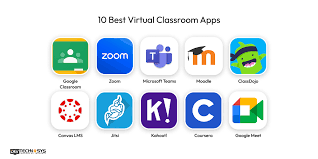
Virtual Classroom Apps are reshaping the way students and teachers connect in India. What once required physical classrooms, chalkboards, and fixed schedules has now evolved into flexible, interactive, and accessible learning experiences. From schoolchildren in small towns to professionals in metropolitan cities, these apps are bridging educational gaps and creating opportunities for millions.
Virtual Classroom Apps and the Digital Shift
The rise of Virtual Classroom Apps began with the growing demand for accessible education. Traditional classrooms often struggled to reach every corner of the country, leaving many students behind. With affordable smartphones and internet connectivity, platforms like Google Classroom, Microsoft Teams, and Zoom transformed screens into classrooms. Suddenly, a student in Alwar or Jaipur could attend the same lecture as one in Delhi or Mumbai.
This shift is not just technological—it’s cultural. Learners now see education as flexible, interactive, and personalized, breaking away from rigid structures of the past.
Government Support for Virtual Classroom Apps
The government has played a crucial role in advancing Virtual Classroom Apps. Initiatives like DIKSHA and SWAYAM provide free resources, including video lectures, e-books, and interactive modules. These platforms ensure that students from diverse backgrounds can benefit, regardless of geography or financial status.
During the pandemic, these apps became lifelines, enabling continuity of education when physical classrooms shut down. Teachers adapted quickly, conducting live sessions, sharing assignments, and tracking progress—all through digital platforms. The government’s commitment to digital learning highlights its vision of education as a universal right.
Virtual Classroom Apps in Rural India
One of the most inspiring aspects of Virtual Classroom Apps is their impact on rural education. Imagine a small village school where students once relied on outdated textbooks. Today, with solar-powered tablets and internet connectivity, those same students can watch animated lessons, participate in quizzes, and even interact with teachers across the country.
Real-life examples abound. In Uttar Pradesh, teachers share daily lessons through WhatsApp groups. In Bihar, students preparing for competitive exams rely on YouTube channels offering free tutorials. These stories prove that technology is not replacing teachers—it’s empowering them.
Challenges Facing Virtual Classroom Apps
The journey of Virtual Classroom Apps is not without challenges. Connectivity issues in remote areas, affordability of devices, and digital literacy among parents and teachers remain hurdles. Screen fatigue and reduced social interaction among students are also concerns.
Yet, solutions are emerging. Telecom companies are expanding networks, NGOs are donating devices, and training programs are helping teachers adapt to digital tools. The resilience of India’s education system lies in its ability to innovate and overcome obstacles.
Personalized Learning Through Virtual Classroom Apps
One of the most exciting outcomes of Virtual Classroom Apps is personalized education. Unlike traditional classrooms, where one-size-fits-all teaching often leaves some students behind, digital platforms adapt to individual needs. AI-driven tools analyze performance and suggest tailored lessons, ensuring that every learner progresses at their own pace.
For instance, a student struggling with fractions can receive extra practice modules, while another excelling in algebra can move ahead to advanced topics. This flexibility is revolutionizing how students engage with subjects, making learning more effective and enjoyable.
Teachers and Virtual Classroom Apps
Teachers remain central to education, even in the digital age. With Virtual Classroom Apps, their role has evolved. Educators can now create interactive lessons, track student progress, and provide instant feedback. Far from being sidelined, teachers are becoming facilitators of knowledge, guiding students through a sea of information.
Professional development programs are also helping teachers adapt. Online training modules, webinars, and certification courses ensure that educators remain updated with the latest teaching methodologies. This continuous learning culture is strengthening the backbone of India’s education system.
Skill Development Through Virtual Classroom Apps
Beyond schools, Virtual Classroom Apps are transforming skill development. Platforms like Coursera, Udemy, and Skillshare are popular among young professionals seeking to upskill. Government-backed programs such as Skill India leverage digital platforms to train workers in sectors ranging from IT to healthcare.
This focus on lifelong learning is crucial in a rapidly changing job market. As automation and AI reshape industries, digital learning ensures that India’s workforce remains competitive and future-ready.
Cultural Impact of Virtual Classroom Apps
Education in India has always been revered, but the digital revolution is changing cultural perceptions. Parents who once insisted on traditional classrooms now embrace online learning for their children. Students who once viewed exams as the sole measure of success now explore creative projects, coding challenges, and collaborative assignments.
This cultural shift is profound. It signals a move from rote learning to critical thinking, from memorization to application. And it’s happening across age groups—from schoolchildren to working professionals.
Future of Virtual Classroom Apps
Looking ahead, Virtual Classroom Apps are poised for even greater growth. Virtual reality classrooms, AI tutors, and gamified learning experiences are on the horizon. Imagine students exploring the solar system through VR headsets or practicing surgery in simulated environments. These innovations will redefine education, making it immersive and experiential.
India’s demographic advantage—its young population—means that the demand for digital learning will only increase. With continued investment in infrastructure, teacher training, and content development, the country is set to become a global leader in online education.
Read also:-
e shiksha portal
मनरेगा बिहार
e shikshakosh bihar gov in login portal
बिहार मनरेगा
charlotte fc vs new york city fc lineups
mnrega yojna bihar
brazil national football team vs senegal national football team lineups