

Fastest centuries in cricket represent some of the most breathtaking and memorable feats in the sport’s long and storied history. These explosive innings capture not just skill and timing but also intent, power, and the ability to change the tide of a match in moments. Whether it’s in Test cricket showcasing aggressive strategy, or in limited‑overs formats where boundaries fly every over, the fastest hundreds thrill fans and etch players’ names into the record books forever.
From historic knock‑outs of bowling attacks to jaw‑dropping individual brilliance, this deep dive into the fastest centuries in cricket brings you closer to these iconic moments, the stories behind them, and why they matter in the modern game. Let’s explore the legends, the matches, and the magic behind these extraordinary milestones.
What Makes the Fastest centuries in cricket So Special
Centuries are already a significant landmark in batting — they reflect stamina, concentration, and the ability to build innings steadily. But when a player reaches triple figures in record time, it’s a bold statement of intent. These performances blend raw power, pinpoint accuracy, and often a touch of audacity.
In shorter formats like One‑Day Internationals (ODIs) and T20 cricket, reaching 100 runs quickly can drastically shift momentum, demoralizing bowling attacks and boosting team morale. Even in the traditionally patient world of Test cricket, a rapid hundred can disrupt strategies and rewrite narratives.
Across formats, what unites all fastest centuries in cricket is how they create unforgettable match contexts — a batsman’s fierce response to pressure, a team’s need to surge ahead, or simply a moment of brilliance that defies the conventional pace of play.
Historic Speed in Test Cricket
In the realm of Test cricket — the longest and most traditional format — scoring quickly is often seen as unconventional, as batting tends to be measured and cautious. Yet some players broke the mold with century knocks that combined aggression with exceptional skill.
New Zealand’s Brendon McCullum produced one of the most talked‑about innings in modern Test history when he reached his hundred in just 54 balls against Australia at Christchurch in 2016. This blistering knock became the fastest Test hundred in terms of balls faced, etching McCullum’s name alongside legends of the game.
But McCullum wasn’t alone in redefining rapid scoring in Tests. West Indian great Viv Richards and Pakistan’s Misbah‑ul‑Haq both reached centuries off 56 deliveries, showcasing raw hitting ability even in the longest format of the sport.
These innings were more than statistical records — they reflected a shift in mindset. Batters in modern Tests balance patience with opportunistic power, seizing moments when the bowling attack is vulnerable and driving momentum forward.
Thrilling Pace: ODIs & the Power of Quick Hundreds
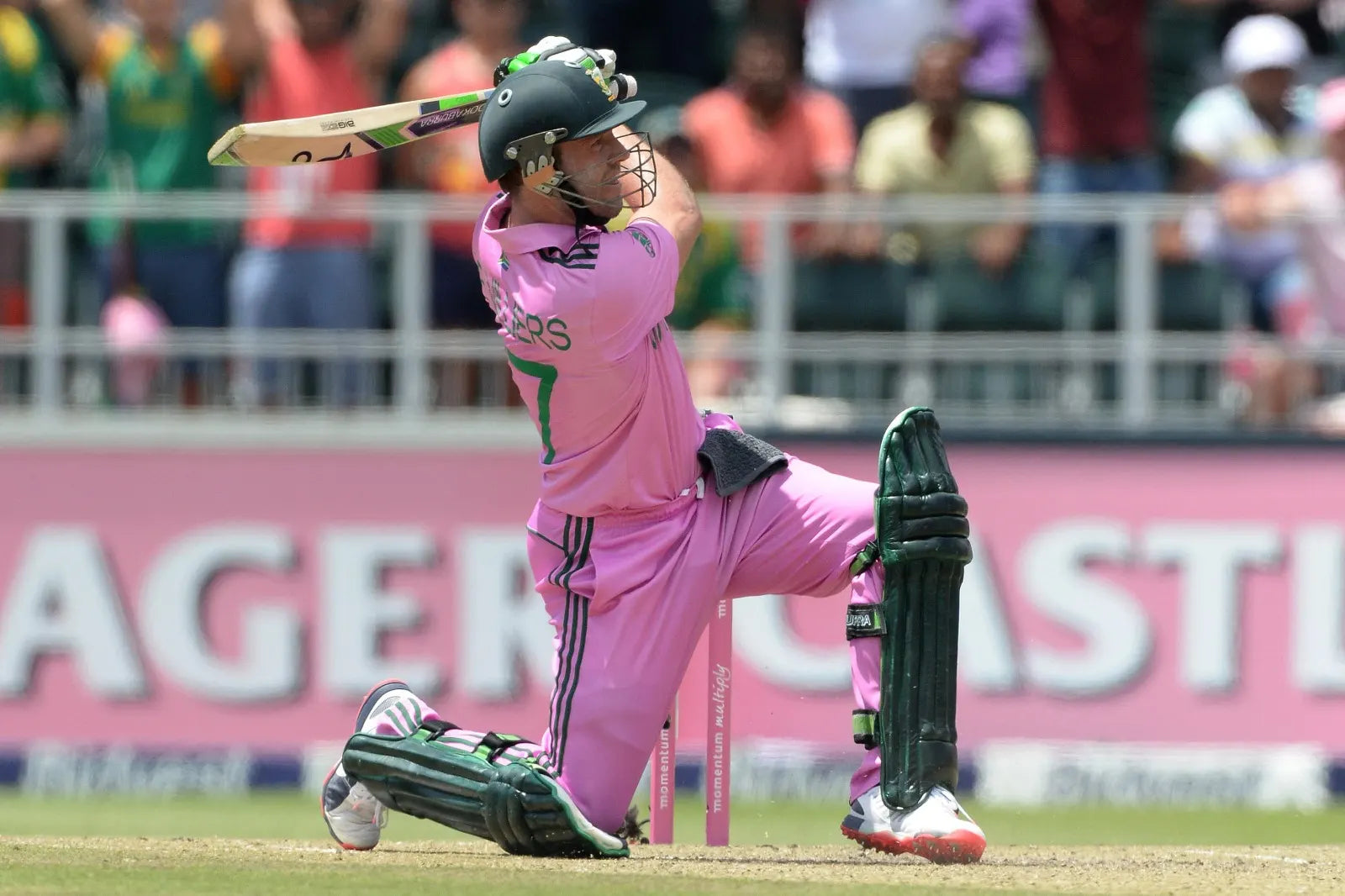
One‑Day International cricket has always been a mix of strategy and fireworks. But even within that context, some centuries stand out for their extraordinary speed. Among these, a performance by South African legend AB de Villiers remains unrivalled. He famously scored an ODI century off just 31 balls against the West Indies in Johannesburg in 2015, a knock that sits atop the list of fastest centuries in cricket across formats.
De Villiers’ explosive innings wasn’t just a display of brute force — it was cricket IQ at its finest. With a combination of precise placement, towering sixes, and calculated boundaries, he carved his way into record books and left spectators and bowlers alike in awe.
Following him chronologically, New Zealander Corey Anderson registered a 36‑ball century, and Pakistan’s aggressive Shahid Afridi reached his hundred in 37 balls — performances that continue to be celebrated as benchmarks of ODI power hitting.
These fast ODI centuries aren’t merely highlights — they are demonstrations of impact. Many of these innings came in matches where quick runs helped teams chase daunting targets or set intimidating totals, shaping match outcomes decisively.
T20 Cricket: A Playground for Speed
The shortest international format of all — T20 cricket — has transformed the art of quick scoring, creating so many lightning‑paced innings that the definition of “fast” keeps evolving. With only 120 balls in an innings, every delivery matters, and many batsmen have risen to the challenge spectacularly.
At the top of the charts, Sahil Chauhan’s remarkable 27‑ball century for Estonia against Cyprus stands as the fastest 100 in T20I history. This feat, celebrated for its audacity and power, highlights how cricket at the international level has become increasingly explosive.
Behind him, players like Muhammad Fahad, Finn Allen, and Jan Nicol Loftie‑Eaton have all scored centuries in astonishingly quick time — often rewriting records in high‑pressure matches.
What makes these fastest centuries in cricket particularly exciting in the T20 format is how they display both skill and innovation. Some players use innovative shots, swift footwork, and strategic targeting of weaker bowlers, while others simply unleash raw power at every opportunity.
Backstories: Batsmen Who Burned Up the Scoreboard
Among the list of record‑breaking innings, several stand out not merely for their pace but for their inspirational tales.
Take Finn Allen’s 33‑ball century against South Africa in a ICC T20 World Cup semi‑final — a match where the Kiwi opener produced one of the most breathtaking innings under immense pressure, helping his team secure a crucial victory.
Then there’s the story of Corey Anderson, the first to break into the sub‑40 ball century circle in ODIs, surprising spectators and experts alike with his fearless approach. These innings often become defining moments in players’ careers, signaling their arrival on the grand stage.
Through these tales, the fastest centuries in cricket become more than records — they become narratives that inspire future generations of batters to dream big, swing boldly, and seize opportunities in the heat of competition.
What These Records Tell Us About Modern Cricket
Reviewing the players and match situations associated with the fastest centuries in cricket offers fascinating insight into how the game has evolved. Less than two decades ago, a 40‑ball century was a rare spectacle. Today, sub‑30 ball hundreds are not just dreams but achievable milestones for explosive talents.
This shift reflects broader changes in cricketing strategy. Teams now value aggressive power hitters who can change the course of a match in a single session. Bowlers, in turn, have adapted with variations in pace, spin, and tactical field placements — a cat‑and‑mouse game that pushes boundaries at every turn.
Moreover, these fast hundreds often have ripple effects beyond a single game. They can inspire team confidence, influence league dynamics, and even alter selection philosophies, emphasizing the importance of impactful performances.
Memorable Matches Defined by Rapid Hundreds
Beyond individual achievement, the fastest centuries in cricket often define epic encounters. A blistering hundred can lift a team from the brink of collapse, turn a modest total into a competitive score, and send crowds into a frenzy.
For instance, when de Villiers raced to 100 off 31 balls, South Africa’s target suddenly looked daunting. In contrast, a quick hundred in a T20 World Cup semifinal can leave the opposition reeling with psychological pressure, affecting their performance long after the final ball.
These innings become part of cricket folklore — celebrated in commentary, replayed on highlight reels, and analysed by fans and experts alike. They form narratives that echo across seasons, trophies, and careers.
Fans, Records and the Future of Fast Scoring
For fans, statistics like the fastest centuries in cricket aren’t just trivia. They represent moments of pure excitement, glory, and disbelief. Conversations in stadiums, social media buzz, and debates on cricket shows often revolve around who might break the next record.
Young cricketers growing up today aspire to reach these heights, training to score quickly without losing technique or awareness. Coaches study these innings for lessons on aggression tempered with precision.
Looking ahead, the relentless evolution of batting techniques, fitness, and cricketing strategy suggests that the pace of scoring will continue to accelerate. New talents will emerge, new styles will be refined, and fans will witness more astonishing centuries that push the boundaries of possibility.
Through it all, the fastest centuries in cricket will remain some of the most cherished and talked‑about episodes in the sport — a celebration of human capability, competitive spirit, and the sheer thrill of the game.
Read also:
new zealand national cricket team vs pakistan national cricket team match scorecard
bangladesh national cricket team vs sri lanka national cricket team
pakistan national cricket team vs west indies cricket team match scorecard
sri lanka national cricket team vs afghanistan national cricket team match scorecard
new zealand women’s national cricket team vs england women’s national cricket team match scorecard
west indies cricket team vs pakistan national cricket team match scorecard