

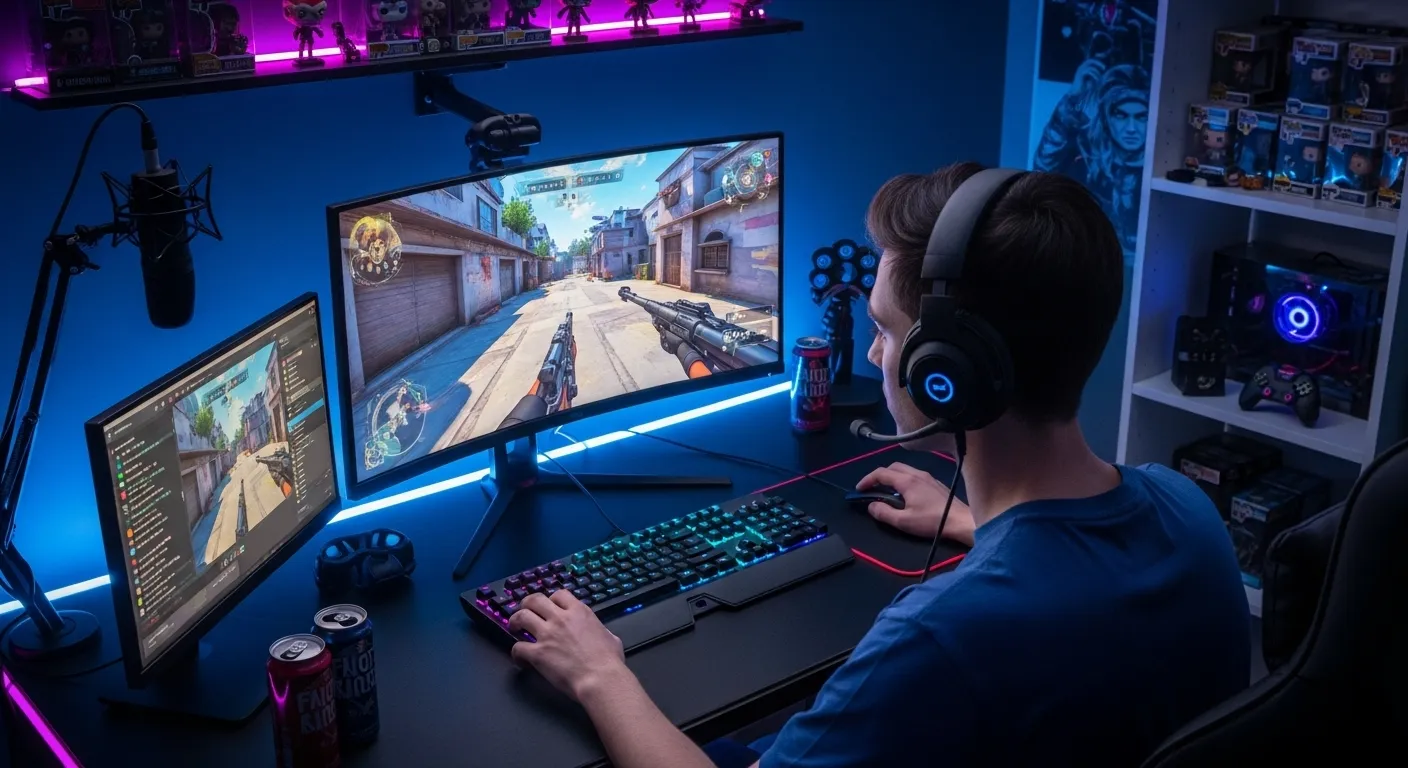
Competitive social gaming is redefining how people connect, compete, and build communities in the digital age. What once started as casual multiplayer fun has evolved into an ecosystem where rivalry and relationships grow side by side.
You can see it everywhere. Friends challenge each other in mobile strategy games during lunch breaks. Streamers compete live while chatting with thousands of viewers. Online tournaments fill virtual arenas with spectators who cheer, comment, and analyze every move.
This shift is not accidental. It reflects deeper changes in how we socialize, how we use technology, and how we seek achievement in a connected world.
In this article, we explore how competitive social gaming works, why it’s thriving, and what makes it one of the most influential trends in modern entertainment.
Table of Contents
ToggleWhat Is Competitive Social Gaming?
Competitive social gaming combines structured competition with strong social interaction. Unlike traditional single-player games, these experiences are designed to connect players while encouraging rivalry.
The “competitive” aspect brings rankings, leaderboards, timed matches, and rewards. The “social” element introduces chat features, teams, guilds, shared achievements, and live communication.
It’s not just about winning. It’s about winning together, losing together, and sharing the journey.
From casual mobile apps to large-scale esports ecosystems, competitive social gaming exists across platforms and genres. The key difference is that social engagement is built into the core experience rather than added as an afterthought.
Why Competitive Social Gaming Is Growing So Fast
The rapid growth of competitive social gaming can be traced to accessibility and human psychology.
Smartphones and high-speed internet have lowered entry barriers. Almost anyone can join a match within seconds.
At the same time, humans are naturally wired for competition and connection. We want recognition, progress, and belonging. When a platform delivers all three, it becomes incredibly compelling.
During global lockdown periods, online gaming spaces became digital meeting rooms. Many players who initially joined for distraction stayed for the friendships. That behavioral shift accelerated adoption worldwide.
Today, competitive social gaming is not just entertainment. It is a social infrastructure.
The Psychology Behind Competitive Social Gaming
Competition triggers motivation. Social interaction triggers emotional engagement. Together, they create a powerful feedback loop.
When players see their name climbing a leaderboard, they feel accomplishment. When teammates celebrate a shared victory, they feel connection.
Even friendly rivalry can strengthen bonds. Many friend groups build traditions around weekly tournaments or in-game challenges.
Psychologists often point out that structured competition improves focus and resilience. In gaming environments, failure is frequent but low-risk. That encourages persistence and growth.
Competitive social gaming turns improvement into a shared narrative rather than a solitary struggle.
The Evolution from Solo Play to Social Arenas
Gaming was once seen as a solitary hobby. Early console and PC experiences focused on single-player storylines.
Over time, internet connectivity introduced multiplayer modes. At first, these were simple add-ons. But eventually, social features became central to design.
Voice chat, cooperative missions, guild systems, and live streaming changed expectations. Players no longer wanted to play alone. They wanted interaction.
Competitive social gaming represents the culmination of this shift. Games are now built with community in mind from day one.
This transformation has reshaped how developers approach engagement and retention.
Real-Life Stories from Competitive Social Gaming Communities
Consider a group of college friends who moved to different cities after graduation. Weekly online tournaments became their way of staying connected. What began as casual matches evolved into a structured mini-league with rankings and prizes.
Or think about content creators who built entire careers around streaming competitive matches. Their audiences are not passive viewers. They interact, suggest strategies, and sometimes join games.
These examples highlight how competitive social gaming extends beyond the screen. It fosters real relationships and meaningful shared experiences.
Key Elements That Define Competitive Social Gaming
A successful competitive social gaming platform integrates several core components.
Clear ranking systems provide measurable progress.
Integrated communication tools allow seamless interaction.
Balanced matchmaking ensures fair competition.
Reward systems encourage consistent participation.
When these elements align, players remain engaged long-term.
Developers increasingly use behavioral analytics to refine these systems, ensuring that the balance between challenge and enjoyment remains optimal.
The Role of Esports in Competitive Social Gaming
Esports has elevated competitive gaming into a spectator sport. Large tournaments attract millions of viewers worldwide.
While not all competitive social gaming experiences aim for professional esports status, the influence is undeniable.
Leaderboards and ranked modes mirror tournament structures. Streaming platforms amplify competitive moments, turning casual matches into shareable highlights.
This ecosystem reinforces the cultural legitimacy of gaming as both entertainment and competition.
Technology Driving Competitive Social Gaming
Advances in cloud computing, mobile processing power, and real-time communication technology have made competitive social gaming smoother than ever.
Low-latency servers reduce lag, ensuring fairness.
AI-driven matchmaking pairs players of similar skill levels.
Cross-platform integration allows users on different devices to compete seamlessly.
These innovations enhance trust in the system, which is crucial for maintaining engagement.
As infrastructure continues to improve, the potential for immersive and socially rich experiences grows exponentially.
Benefits Beyond Entertainment
While many join competitive social gaming for fun, the benefits often extend further.
Players develop strategic thinking and decision-making skills. Fast-paced matches improve reaction times and focus.
Team-based formats encourage communication, leadership, and conflict resolution.
In some cases, gaming communities provide emotional support networks. Shared challenges create strong bonds.
When approached responsibly, competitive social gaming can be both enriching and enjoyable.
Challenges Facing Competitive Social Gaming
Despite its growth, competitive social gaming is not without challenges.
Toxic behavior can disrupt community harmony. Developers must implement moderation tools and reporting systems.
Balancing monetization with fairness is another concern. Pay-to-win mechanics can undermine competitive integrity.
Screen time management also matters. Players need to maintain healthy habits.
Responsible design and informed participation are essential for sustainable growth in this space.
Competitive Social Gaming in Education and Business
Interestingly, elements of competitive social gaming are being adopted outside entertainment.
Educational platforms incorporate leaderboards and collaborative challenges to boost student engagement.
Corporate training programs use gamified competitions to encourage skill development.
These applications demonstrate that the principles behind competitive social gaming are versatile and impactful.
The combination of motivation, accountability, and community works in many contexts.
The Future of Competitive Social Gaming
Looking ahead, immersive technologies like virtual reality may deepen social interaction within competitive environments.
Imagine stepping into a virtual arena where you not only compete but physically gesture, communicate, and celebrate with teammates.
Blockchain-based reward systems and digital ownership models could further redefine incentives.
However, the core appeal will likely remain unchanged: people enjoy testing their skills while connecting with others.
Competitive social gaming is not a passing trend. It represents a structural shift in digital culture.
Building Trust and Community in Competitive Social Gaming
Trust is the backbone of any competitive system. Players must believe that matches are fair and data is accurate.
Transparent ranking algorithms and anti-cheat measures strengthen credibility.
Community guidelines and active moderation foster a safe environment.
When trust and fairness are prioritized, competitive social gaming communities flourish.
Players invest time and emotion because they feel valued and respected.
Why Brands Are Investing in Competitive Social Gaming
Brands recognize that competitive social gaming offers unparalleled engagement opportunities.
Sponsorships, branded tournaments, and influencer partnerships allow companies to connect authentically with audiences.
Unlike traditional advertising, participation-based engagement feels organic.
However, authenticity is key. Communities quickly detect forced marketing. Brands that support rather than exploit gaming culture earn long-term loyalty.
Personal Growth Through Competitive Social Gaming
Beyond entertainment and industry trends, competitive social gaming often leads to personal growth.
Players learn to handle defeat gracefully and celebrate wins humbly.
They develop discipline by practicing consistently.
They build friendships across geographical boundaries.
These experiences contribute to confidence and resilience in real life.
The competitive element pushes individuals to improve, while the social element reminds them they are not alone.
Competitive social gaming continues to evolve, blending rivalry, collaboration, and community into a single dynamic experience. As technology advances and global connectivity deepens, its influence will likely expand across industries, cultures, and generations.
Read also:-
madamekafussu
photoacompsp
lill94m-plor4d85
fikamte
mecardimon