

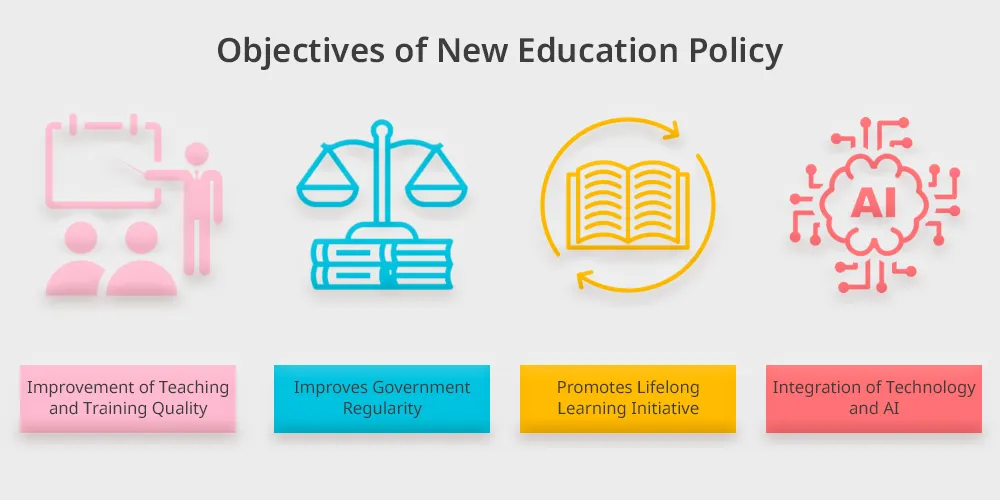
New Education Policy Updates are currently sweeping through the academic landscape, promising to overhaul a system that has remained largely stagnant for over three decades. For parents, students, and educators alike, these changes represent a fundamental shift in how we perceive knowledge, intelligence, and career preparation. Imagine a classroom where a child is not judged solely by their ability to memorize dates or formulas, but by their capacity to solve real-world problems and think critically. This is the heart of the new vision, moving away from a high-pressure, rote-learning environment toward one that celebrates individual talent and holistic development. The excitement in the air is palpable, as schools begin to transition into this modern era of instruction.
For years, the traditional 10+2 structure served as the rigid backbone of our schooling, often forcing students into narrow silos far too early in their lives. The recent policy shifts replace this with a more fluid 5+3+3+4 model, which recognizes that the cognitive development of a child happens in distinct stages. By breaking down the educational journey into foundational, preparatory, middle, and secondary phases, the system can now cater to the specific needs of each age group. This isn’t just a change in numbers; it is a change in philosophy. It acknowledges that the first five years of a child’s education are the most critical for building a strong base in literacy and numeracy, setting the stage for everything that follows.
Consider the story of a young student named Arjun, who has always had a knack for dismantling old electronics to see how they work but struggled with the intense memorization required for his history exams. Under the old regime, Arjun might have been labeled an average student, his mechanical genius overlooked in favor of standardized test scores. With the New Education Policy Updates coming into play, students like Arjun now have the opportunity to explore vocational crafts like coding, carpentry, or electric work as early as the middle school years. This integration of vocational and academic paths ensures that every child can find their passion and develop skills that are actually relevant in today’s diverse job market.
The move toward a multi-disciplinary approach is perhaps the most liberating aspect of these updates. For too long, we have lived in a world where a student had to choose between being a “science student” or an “arts student,” with very little room for overlap. In the new system, a student can choose to study physics alongside fashion design or chemistry with creative writing. This reflects the reality of the modern workforce, where the most successful individuals are often those who can bridge the gap between different fields of expertise. By removing these artificial barriers, we are allowing the next generation to become more well-rounded, adaptable, and innovative thinkers.
Deep Dive into the 5+3+3+4 Schooling Framework
Understanding the structural changes is essential for navigating the new academic terrain effectively. The foundational stage covers the first five years, including three years of pre-school and grades one and two. During this period, the focus is entirely on play-based and activity-based learning. There are no heavy textbooks or high-stakes exams; instead, the goal is to foster a love for learning and develop basic communication skills. This stage recognizes that children learn best when they are engaged and curious, rather than stressed. It is a time for exploration, where the classroom becomes a space for social interaction and sensory development.
As students move into the preparatory stage, spanning grades three to five, the curriculum begins to introduce formal subjects but maintains a light, interactive approach. The emphasis here is on building a solid foundation in reading, writing, and mathematics. Educators are being encouraged to use local languages and mother tongues as the medium of instruction during these early years. Research consistently shows that children grasp complex concepts much faster when taught in a language they speak at home. This inclusive approach ensures that students from all backgrounds have an equal starting point, reducing the achievement gap that often plagues diverse educational systems.
The middle stage, covering grades six to eight, is where the introduction of abstract concepts begins. Students start to see the connections between different subjects like science, mathematics, arts, and social sciences. This is also the stage where vocational education is introduced, often through “bagless days” where students intern with local professionals. Whether it is learning about organic farming from a local gardener or understanding the basics of software development, these experiences provide a practical context to theoretical knowledge. It transforms the school from an isolated building into a hub of community learning and real-world application.
Finally, the secondary stage from grades nine to twelve offers four years of multidisciplinary study. This phase is designed to provide greater depth, critical thinking, and flexibility in subject choices. Instead of a single year-end exam that determines a student’s entire future, the policy suggests a move toward semester-based assessments. This reduces the intense pressure of “board exams” and allows for a more continuous and comprehensive evaluation of a student’s progress. It encourages students to stay engaged throughout the year, rather than cramming at the last minute, leading to a much deeper and more permanent understanding of the curriculum.
Higher Education and the Flexibility of Multiple Entry Points
The changes are equally transformative when we look at the university level and beyond. One of the most significant New Education Policy Updates is the introduction of a four-year undergraduate program with multiple entry and exit options. In the past, if a student had to leave college after two years due to financial or personal reasons, they would walk away with nothing but “incomplete” on their record. Now, that same student would receive a diploma after two years, a certificate after one year, and a full degree after completing the four-year program. This provides a safety net for students and recognizes the value of the time they have invested in their education.
This flexibility is further enhanced by the creation of an Academic Bank of Credits (ABC). This digital repository stores the academic credits earned by a student from various recognized institutions. If a student wants to take a break or transfer to a different university, their credits follow them. This makes education a lifelong journey rather than a one-time sprint. It allows individuals to learn at their own pace, perhaps working for a few years and then returning to finish their degree with a clearer sense of their career goals. This system aligns perfectly with the needs of a modern, mobile society where career paths are rarely linear.
The research culture in higher education is also receiving a major boost through the establishment of a National Research Foundation. This body aims to foster a culture of inquiry and innovation across all disciplines, not just the sciences. By providing funding and mentorship for research projects at the undergraduate and postgraduate levels, the policy aims to turn universities into powerhouses of new ideas. This is crucial for a nation that wants to lead on the global stage. When students are encouraged to ask “why” and “how” from an early age, they become the inventors and thought leaders of tomorrow, driving economic and social progress.
Furthermore, the internationalization of education is a key pillar of these updates. Top-ranked foreign universities will now find it easier to set up campuses locally, while our own institutions are being encouraged to expand globally. This creates a healthy competitive environment and provides students with access to world-class faculty and resources without having to leave their home country. It also facilitates student exchange programs and collaborative research, making the educational experience truly global. The goal is to create a “global citizen” who is rooted in their own culture but capable of thriving anywhere in the world.
Empowering Teachers as the Architects of Change
No educational reform can succeed without the active participation and empowerment of teachers. The policy recognizes that teachers are the most important factor in a student’s success and focuses heavily on their professional development. The introduction of National Professional Standards for Teachers (NPST) ensures that educators are held to high standards of quality and accountability. This includes continuous training programs that keep teachers updated on the latest pedagogical techniques and technological tools. A teacher who is constantly learning is better equipped to inspire their students to do the same.
The shift toward formative assessment—evaluating a student’s progress through projects, presentations, and daily participation rather than just exams—requires a new set of skills for educators. Teachers are moving away from being “lecturers” who simply deliver information and are becoming “facilitators” who guide students through the learning process. This requires a deep understanding of student psychology and the ability to differentiate instruction based on individual needs. By providing teachers with the autonomy to design their own lesson plans and assessment methods, the policy is restoring the dignity and creativity of the teaching profession.
Technology is playing a massive role in this teacher empowerment. Digital platforms are being used to share best practices, provide online training modules, and manage administrative tasks more efficiently. This frees up more time for teachers to focus on what they do best: interacting with and mentoring their students. In many rural areas, digital tools are being used to bridge the gap in teacher availability, ensuring that every child has access to quality instruction regardless of their location. The blending of human expertise with digital efficiency is creating a more resilient and scalable educational system.
We must also look at the social status of teachers. By improving the working conditions and career progression paths for educators, the policy aims to attract the brightest minds into the teaching profession. When teaching is seen as a prestigious and rewarding career, it creates a positive feedback loop that benefits the entire society. The updates emphasize that teachers should not be burdened with non-teaching administrative work, allowing them to dedicate their energy entirely to the academic and emotional growth of their students. This holistic support for teachers is the secret ingredient that will make these reforms a reality.
The Role of Technology and Inclusive Learning
In an increasingly digital world, the integration of technology into the classroom is no longer optional. The New Education Policy Updates emphasize the creation of a National Educational Technology Forum (NETF) to provide a platform for the free exchange of ideas on the use of technology to enhance learning. From virtual reality labs that allow students to explore the human heart to AI-driven personalized learning apps, the possibilities are endless. These tools are not meant to replace the teacher but to act as powerful catalysts that make learning more engaging and accessible.
Inclusivity is another major focus area. The policy introduces the concept of “Special Education Zones” for regions that are historically disadvantaged. These zones receive additional funding and resources to ensure that every child, regardless of their socio-economic status or physical ability, has access to quality education. There is also a strong emphasis on supporting students with disabilities through the use of assistive technology and specialized teacher training. An inclusive classroom is one where every student feels valued and supported, creating a sense of belonging that is essential for academic success.
The digital divide remains a challenge, but the policy outlines clear steps to address it. By investing in digital infrastructure and providing affordable devices to students in need, the goal is to ensure that no child is left behind in the digital age. This includes the development of high-quality digital content in multiple regional languages, making it easier for students to learn in their own context. The democratization of information through technology is one of the most powerful ways to ensure social equity and provide every child with a fair shot at success.
Adult education and lifelong learning are also being revamped through digital platforms. The policy recognizes that learning doesn’t stop after graduation. In a world where industries are constantly being disrupted, the ability to reskill and upskill is vital. Online portals and mobile apps are being developed to provide adults with access to vocational training, financial literacy programs, and basic education. This commitment to lifelong learning ensures that the entire population can adapt to the changing demands of the economy and continue to contribute to society throughout their lives.
Implementation Challenges and the Path Forward
While the vision of the New Education Policy Updates is undeniably bold and inspiring, the path to full implementation is not without its hurdles. Transitioning a massive and diverse educational system requires careful planning, significant funding, and the cooperation of multiple stakeholders. One of the primary challenges is the retraining of millions of teachers across the country. Changing the mindset of educators who have been teaching in a certain way for decades is a slow and delicate process. It requires patience, persistent support, and a clear demonstration of the benefits of the new methods.
Infrastructure is another critical factor. Many schools, particularly in rural areas, still lack basic facilities like clean water, electricity, and internet connectivity. Implementing a technology-driven, activity-based curriculum requires a physical environment that supports these activities. This means building more labs, libraries, and creative spaces where students can collaborate and experiment. The government and private sector must work together to ensure that the physical infrastructure keeps pace with the pedagogical changes. It is a massive undertaking, but one that is essential for the future of the nation.
There is also the challenge of aligning the new school structure with existing college entrance requirements and job market expectations. As schools move away from rote learning, universities and employers must also change how they evaluate candidates. If the “board exam” becomes less important, we need reliable and fair alternative methods to measure a student’s potential. This requires a coordinated effort across the entire academic and professional spectrum to ensure that the transitions are smooth and that students are not caught in the middle of conflicting systems.
Despite these challenges, the sense of optimism is hard to ignore. We are seeing a growing movement of “early adopters”—schools and educators who are already implementing these changes and seeing positive results. These success stories serve as a roadmap for others to follow. By focusing on small, incremental wins and celebrating the progress we make, we can build the momentum needed for large-scale change. The transition may take years, but the end result—a more creative, inclusive, and future-ready educational system—is well worth the effort.
Parental Engagement and the Evolving Home Environment
The role of parents in this new educational journey cannot be overstated. For the policy to truly take root, parents need to move away from the obsession with marks and rankings. They are being encouraged to become active partners in their child’s education, focusing on their emotional well-being and character development. A child who feels supported at home is more likely to take risks and explore their interests at school. This shift in parental mindset is perhaps the most difficult but necessary part of the entire reform process.
Schools are beginning to organize workshops and orientation sessions to help parents understand the New Education Policy Updates. These sessions explain the new grading systems, the importance of vocational skills, and how to support a child’s learning at home without being overbearing. When parents and teachers are on the same page, the child receives a consistent message about the value of curiosity and perseverance. It creates a holistic ecosystem where the home and the school work in harmony to nurture the child’s potential.
We are also seeing a change in how parents perceive non-traditional career paths. As the policy gives equal importance to arts, sports, and vocational crafts, parents are starting to realize that success doesn’t always have to mean becoming a doctor or an engineer. There is a growing appreciation for the creative economy and the diverse opportunities available in the modern world. This reduction in parental pressure is a massive relief for students, allowing them to pursue their true passions with confidence. The happiness and mental health of our children are finally being recognized as a priority.
The home environment itself is becoming a space for learning. With the focus on activity-based education, parents are finding ways to turn daily chores or family outings into learning opportunities. Whether it is calculating the budget for a grocery trip or discussing the science behind cooking, these “teachable moments” reinforce what the child learns in school. This makes education feel less like a chore and more like a natural and exciting part of life. It builds a bridge between the classroom and the real world, showing the child that knowledge is everywhere.
Preparing for a Future of Infinite Possibilities
As we look ahead, it is clear that the landscape of education will continue to evolve. The goal of the current reforms is to create a system that is flexible enough to adapt to whatever the future may hold. By focusing on “learning how to learn,” we are giving our students the most valuable skill of all. In a world where many of the jobs of the future haven’t even been invented yet, the ability to think critically, communicate effectively, and adapt to new information is more important than any specific set of facts.
The impact of these updates will be felt for generations to come. We are moving toward a society where education is a tool for empowerment rather than a hurdle to be cleared. It is a shift from a culture of “what to think” to a culture of “how to think.” This subtle but profound change has the potential to solve some of our most pressing social and economic challenges. When every individual is given the opportunity to reach their full potential, the entire community benefits from their contributions.
The journey has just begun, and there will undoubtedly be more New Education Policy Updates as we learn from the implementation process. The key is to remain open to feedback and stay committed to the core values of equity, quality, and inclusion. This is a collective project that requires the participation of every citizen. Whether you are a student exploring a new hobby, a teacher experimenting with a new lesson plan, or a parent supporting your child’s unique path, you are an essential part of this transformation.
The classroom of the future is not just a room with four walls and a chalkboard; it is a dynamic, connected, and compassionate space that reflects the best of our humanity. It is a place where every voice is heard, every talent is nurtured, and every dream is given the chance to take flight. By embracing these changes today, we are laying the foundation for a brighter, more innovative, and more inclusive tomorrow. The potential of our youth is limitless, and it is our collective responsibility to provide them with an educational system that is as ambitious and inspiring as they are.